The Rowdy Goddess

An Ecstatic Vision of the Goddess, dancing in harmony with the Universe.

Landscape and HeartScapes

Assateague Island Pony

Assateague Island Pony

“Where are you from?” is a common enough question.  For me, it is not a simple question.  I always feel the question implies a lot more:  where were you born?; where did you grow up?; where did you last live?; and more.  It speaks to your life before the moment the question is asked.  It often includes an assumption that perhaps you spent the majority of your life or time in one place. I was born in Baltimore but we moved away when I was 18 months old.  We moved, on average every two years, living in several places:  Sioux City Iowa, various parts of the D.C. suburbs on the Maryland side, Indianapolis, New Orleans, Camillus, NY.  It was a nomadic childhood until I was twelve, when we moved to the D.C. suburbs.  We moved once after that to another suburb and I went to two different high schools as a result.  It did leave me feeling unconnected to place for a long time.  From the time I was twelve, we did live in the Maryland suburbs of D.C. and I then went to the University of Maryland also adjacent to D.C.  One of the constants of our lives was our grandparents’ farm on Delmarva Peninsula just outside of Salisbury, MD.  We visited there often.  We stayed on the farm, followed our grandparents around and went to the beach.  It has become our nirvana, our home, our solace, and our destination for life’s journeys.  The beach, particularly at Assateague National Seashore, is part of my bones and blood.  The beach is a metaphor, dream, and destination for a lot of people.  When I was in graduate school, we were reading Sir Philip Sidney’s Arcadia, an English Renaissance poem praising about beautiful utopic place and our professor says, “Our modern-day Arcadia is the beach.”  It is true if you live in that mid-Atlantic region.  I’ve learned it’s not true if you live elsewhere.  People in different areas have different ideas of paradise and utopia. To get to the beaches of the eastern shore from Baltimore and D.C., people need to cross the Chesapeake Bay, another threshold.  The Chesapeake Bay bridge is a modern engineering wonder, built in 1952, the year I was born.  [I don't care, you can do the math!]  Now there are two, but in the old days and today still, the wait at “The Bridge” can be long.   It’s very long expansion bridge that terrifies people.  The bridge also serves as a threshold of crossing from one world to another.   There are many differences between the life on the western shore and the eastern shore.  “The Bridge” lives in the psyches of people as a challenge, a crossing, a pathway to enchantment and more.Chesapeake Bay BridgeWhen I took a creative writing class at a local writing center, the assignment was to write a scene or part of the story where a monument, piece of landscape or significant landscape object was featured as a character or influence.  The teacher commented after reading the stories that nearly everyone in the small class of ten had chosen the Bay Bridge as their significator.  It was then that I realized that landscape and parts of the landscape have powerful influence on how we perceive the world.

In 1992, I moved to Alfred, NY to take a new job.  Alfred is a very small village in the southern tier of Western NY in the foothills of the Allegany Mountains.  It’s a valley with three colleges populating the hills/mountains on either side of Main Street.  Coming from the relatively flat lands of central and eastern Maryland, this was a big change.  I didn’t really realize it until I started living there.  I got an apartment just off Main Street, in the valley.  It was a big adjustment of life for a suburban girl to rural living.  No easy access to things I assumed were part of life.  Shopping had to be planned because the bigger grocery stores were out-of-town.  It was mostly the landscape, though.  Don’t get me wrong, it is beautiful there.  Rocky hills, rugged terrain, and wintry landscape.  I always though the spring was not about graceful growth as it is in Maryland, but rather a triumphant and valorous struggle to be born.  At the end of my third year there, I rented a house just inside the village, but further up the hill.  I felt better there.  I hadn’t realized that I felt like the mountains were closing in on me!On 1996, I got a job in Central New York and live halfway between Ithaca and Cortland.  I have the best of both worlds.  I can shop in the city where I work and drive less than 20 miles to a home in the rural countryside.  I feel better here, like there’s more room.  It’s still not home but I’m content in the beauty and grace of it.  Well, except for the fact that it’s April and there’s still snow on the ground.   Still don’t like that after all this time. Without knowing it, the landscapes of our surrounding shape our perceptions of ourselves, the world, and how the world works for us.  Landscape brings us to paradise, our Arcadia.  For each of us, it will be different.  For me, it’s the stark beauty of Assateauge and the sandy soil of the farm.  For others, it’s the rocky soil and rocks of the mountains, and for still others, it is the desert.  We build our landscapes in our minds and hearts and when we do so, we create them as sacred and special.  It is that ability to create the sacred from our hearts and souls that is part of our divine natures.  For when we create sacred places and actions on this plane, we create them in the other worlds.  We make real the Hermetic phrase, “As above, so below.” May the landscapes of your heart bring you joy, solace, and pleasure today and all days.

Dimes are Magic Money

dimesOut of all the coins, I have always loved dimes.  They are small and they jingle daintily in your pocket or purse.  A small amont of them can really add up in no time and they don’t take up much room as they accumulate.  When I was in the first grade, our teacher read us a book called Follow My Leader:  The story of a blind boy and his guide dog by James B. Garfield, and that book has had a lasting effect for a variety of reasons.  In this case, his teachers show him how to distinguish dimes from other coins–by sized and by the ridged edge.  I think the ridges make the coin very interesting.

I also like dimes because they used to have Mercury on the face and the reverse was very mythological.  While that has changed, I feel like that magical spirit in today’s coin.  I also like dimes because they used to be silver and are still silver colored evoking the moon.  And of course, I like them because they are shiny.

The very first spell I ever did was a money spell that involved dimes.  It was from a Scott Cunningham book and I have been unable to locate it since.  The spell involved taking seven dimes and a candle (I love fire) and burning the candle over seven days and saying a chant.  I can still picture doing it and the tools I used, clear as day.  It worked too.  I got the first promotion that put my career on a track of accomplishment rather than struggling to succeed.  I didn’t get big bucks that time but I have managed to be have a long and successful career since then.  Whenever I write a money or prosperity spell, there is always a dime involved!

About twenty years ago, I participated in some of the Sisterhood dances from AmyLee, a controversial native teacher, who shared a couple of prosperity methods.  I still consider them what my tradition calls “oathbound, ” so I won’t share them,  but I will share my adaptation of what I learned.  After participating in the dance, I began saving dimes.  Even now, I don’t spend them unless I need to.  I put them in a container.  When I feel like the time is right and I need something, I count them out.  I donate some of the money and then spend the rest on what I want or need.  It has a way of adding up.

A few years ago, I was talking to a friend about money and I told her “dimes are magic money,” and described my first spell as well as my collection of dimes, which is at the very least an intentional action and probably also a spell since I chant “dimes are magic money” as I clean out my wallet!  She began doing the same thing.

Recently, a sister in my circle said she did a dime spell with a wonderful variation.  She really needed some fast cash to cover an expense not covered by their medical insurance.  She empowered a handful of dimes and then sprinkled them along the path for someone else to pick up and use.  Generosity, faith, and hope in one small gesture.  In quick succession, three things happened that brought her family some unexpected money.  Dimes are magic money!

Springing Forward

Spring forwardI read a lot of blogs on a variety of topics:  witchy stuff [technical term], Tarot, embroidery and quilting, and library stuff [another technical term].  I get most of them aggregated and read them in digest form, delivered to me first thing in the morning.  It’s my morning newspaper.  That is the reason I read Deborah Blake’s Saturday post on Sunday morning.

I slept late yesterday, and since the time moved forward into daylight savings time, it was well past mid-morning when I had my tea and morning “paper.”  Bleary and lazy, I read Deborah’s post on Springing forward, called “Spring Forward:  Time for a Change.”  In her post, Deb wisely claims the time change as a time for magic, to spring forward into a new habit and a new routine.  It’s like the “boing” of the spring pushes her to be more magical, wise, and witchy.  What a good idea, I thought, a sort of refreshing mini-new-time-resolution.

Especially since I’m not fond of the whole spring forward thing.  I miss the hour we lose.  Although on balance, we are gaining daylight and our sunlit days become longer and more hopeful.  You might ask, what is so Pagan about time change?  It’s like many constructed holidays and changes in our environment, even though it isn’t spiritual per se, it has an impact on our lives.  In the fullness of our lives, everything is magical and everything is full of possibility.  Daylight Savings Time, unless you live in parts of Indiana, is part of the rhythm of our lives and our Universe.  Why not, as Deb says, tap into that energy.

Usually I feel like the energy is out of control as time propels me into spring and summer.  It’s an exciting idea to harness the power of the spring and move with the energy.  I was reminded of one of my favorite quotes [once a dork, always a dork] from Richard III by Shakespeare, “Now is the winter of our discontent made glorious summer….”  Why not spring into glory!  Snap!

So what will I spring into?  Something I’m excited about.  My doctor recommended and I followed up on signing up for a year-long program of diabetes prevention.  I long to prevent diabetes in my life and I think I can do this program but I also have a history of failure in terms of this kind of change.  Now I’m going to spring myself from the shackles of failure.  It’s time to spring into this.  As I will it, so shall it be!

I’ve Got You In My Power

polar bear hugsI’ve got you in my power” is a running family joke.  It started when my sister’s two oldest children were about three and four.  I would envelop them in a big hug and say, “I’ve got you in my power.”  They would squirm, wiggle, and whine, “I don’t want to be in your power.”  The only way to get out of my power was to give me a kiss.  One day after a visit, my niece hugged her father (my brother-in-law) and said, “I’ve got you in my power.”  To which my brother-in-law said, “I see you’ve been spending time with Aunt Gail.”  And thus another Gailism is born.

Since then (my niece and nephew are in their twenties and *gulp* early thirties), my sister has always announced, when visiting my mother, “I’ve got my mother in my power.”  And on it goes.

I had a good conversation with my mother this weekend.  She has taught me many things and most recently not to be afraid of words like cancer, psychosis, confusion, dementia, and cancer [I'm still afraid of the d-word].  She’s a strong woman and sometimes the ravages of time and chronic disease robs her of her usual acuity and abilities.  This all has its ups and downs and riding these waves is a big challenge, particularly since I live 400 miles away.

When I spoke to her I said, “I hear you have [my brother] Frank in your power.”  She answered yes and we talked of many things.  Later on, I asked, “Are you having a good visit with Frank?” She replied, “Yes, it’s always good to have someone new in my power.”  That made me feel delighted, light, and happy.  It was a good conversation to have.

Power has been written about a lot to the point where it gets tiresome.  It does seem to be a lesson that we learn over and over again.  How to use power appropriately, how to recognize when power is being abused, and how to recognize different kinds of power.  For awhile in the Pagan community, it was became a bad word.  One to shy away from.  At the same time, in shamanic terms, the practitioner journeys to non-ordinary reality to gain power.  The key is how you use the power.  If you use it for good and not for ill, or if you use it for the good of your community or others, then the accumulation and use of power is a good one.  If you use power for your own advancement to the detriment of other beings, well then the use of power is a poor one.   I believe power is another word to not fear.

When looking at power and how we gain it and use it, we must use discernment.  I think we need to see what lens we are using to look at power.  Are you looking through the lens of love?  Revenge?  Entitlement?  The way you look at power is important.  If we fear it and shy away from it, then power becomes something bad.

Look at it like a hug.  Hugging is a communication between two beings.  Are you expressing love, can each of you move out of the hug as you need or wish to.  Or is the hug a vise holding you close in ways you do not wish.  If you hug with open arms and allow everyone the choice of leaving or staying, then “I’ve got you in my power,” is a phrase of love, affection, family, and community.

Blessed Be My Plan B

Business plan - woman drawingPlanning is important and I’m a good planner.  I also like to be flexible so that if an opportunity presents itself, I can take advantage of that spontaneously.

A good example of that in ritual was a big deal ritual my coven did for our tradition-wide gathering.  At the time, we were a brand new coven and while I was not new to group gatherings and leadership, this was a venue where I wanted us to excel and shine.  We would be doing the ritual for the gathering of our entire tradition including our elders and founders.   It was daunting, but I knew we could do it and do it fabulously well.

So we rehearsed and rehearsed and rehearsed.  Our group was still learning how to be a coven together and how to do ritual so a big one was intimidating.  As part of the learning and rehearsal, we also practiced how to work through mistakes – keep on going and act like it was meant to be that way.    We where rehearsing right up to the last minute.  It was a little tense and we were all a little bit nervous.  Or maybe a lot.

And the ritual went really, really well!  There were a couple of misspeaks and the priestess went through it like it was meant to be that way.  When we finished the spiral dance and raised a lot of energy, an inspiration came to me.  And I said (for the benefit of the well-rehearsed covener), “I’m going a little off script,” and launched into the unofficial chant of our tradition which raised some incredible magic and energy.  And that is an example of good planning and the ability to be open to spontaneous inspiritation.

Another aspect of planning is being able to pick up the pieces when things go wrong.  “I always have a Plan B” is a Gailism.  It’s part of my professional training, a side effect of working with technology.  What if you plan a ritual and a key person doesn’t show up?  Plan B.  What if you forget to put water in the chalice:  Plan B is to pretend it’s there.  What if you knock over the chalice full of water?  What if you forget which vial contains water, which contains wine, and which contains oil?  Smell it or pretend [Plan B].  What if it rains on your outdoor ritual.  Plan B.

Sometimes you need a Plan C, D, or E.  Just being willing to be aware that things may change is an important part of planning.  It might not be necessary to have a full alternate plan, but rather to have the ability to draw on the well of experience, creativity, and spontaneous growth.  The new inspiriation is always there.  One time I went to a ritual and the priestess didn’t show up.  It turned out she was ill and unable to get out of bed.  So a group of us, some of whom had driven two or more hours, were ready to go about our business.  Wait!  I had a key to the building, so we decided to do the ritual.

We all went to our cars and pulled out blankets and pieces of this and that and pulled together an altar.  I had a Tarot deck and a traveling altar.  One woman had some pretty nifty Pagan stuff in her trunk.  We put together a really good ritual and the performance by a group of people who didn’t know each other was a very enriching experience.

So be ready with Plan A, B, C, and more.  All we need to do is learn our ABCs and draw on our creative power and good intentful heart.  Blessed Be the Plan B!

I Guess We Don’t Have To Do That Again

Einstein-on-insanityI’ve been talking to several people in different parts of my life about this statement:  “I guess we won’t have to do that again.”  It’s from my mother and it is considered another “Gailism.”  It is one of my mother’s classic phrases.   I first remember her using it when we went to this sub shop that we had heard about for years.  The food was supposed to be fabulous and wonderful.  It was some distance from our house and when we finally got to go there to eat, it was clear they were getting ready to close permanently.

It was a weird atmosphere and the food was lackluster and tasteless.  At the end of our meal, my mother said deadpan:  I guess we don’t have to do that again.”  Such dry humor, layered irony, and ruefulness.  We didn’t get to eat out much so a special treat really fell flat.  In so many ways.

And, of course, there is great wisdom in that statement.  We do not have to repeat bad experiences, we can move on, and we can live through disappointment.  And in my family, we move through disappointment into laughter as quickly as possible.  The statement is reminiscent of the definition of insanity attributed to Albert Einstein:  Doing the same thing over and over again and expecting different results.  As human beings, we do that so often.  We choose the same path, the same type of significant other, the same diet and so forth.  Then we wonder why there’s not better or different results.

In our wisdom, we do learn from our errors, our wrong choices, or even choices that were right at the time but wrong now.  Hooray for us!  We can move on to make new mistakes and new choices and to expereience more neSix of Wandsw [insert rude adjective] growth opportunities.  It’s our ability to learn from the past and embrace new choices that make us stronger and wiser.

Sometimes those old issues and errors fool us.  As one friend puts it, the mistakes get dressed up in new party clothes and seduce us again.  If we are smart and if we are lucky, we recognize the old thing in the new duds and catch ourselves before we fall.  Sometimes we learn that there are issues that repeat for us and we need to go deeper to learn the meaning of that for us.  The human experience is rich in texture and scars.

When we triumph over our old errors, the phrase “I guess I don’t have to do that again,” becomes an anthem of victory and accomplishment.  We can move from the irony of that statement into a celebration of the richness of our own experiential lives.

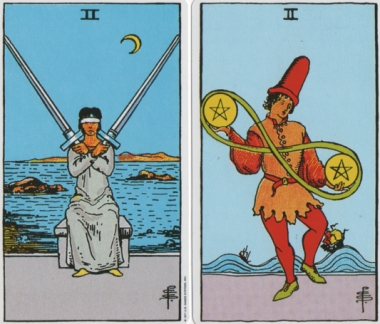
The Six of Wands in the Tarot is a victory card.  It depicts the celebration and triumph of a fight well fought and fairly won.  The funny thing is, the figure in the card is looking to the future and for more things to overcome.  But in this moment, he is taking the time to dress up and celebrate his scars and his resilience.

February is Full Snow Moon: A Meditation and Tarot Spread

The heaviest times for snow are during February.  Sometimes the harsh weather conditions led native peoples to call this the Full Hunger Moon since hunting was very difficult.  Our hearts and souls often hunger for warmth and comfort during this time.               

Snow is water made solid.  We work with water when we do soul work and emotional healing.  Water washes over us and cleanses us and sometimes we drown in the profundity of it all.  In its solid form we can feel remote and cut off from our emotional and soul selves and at the same time its solid form is a reminder that our emotions and souls can be manifested in the material world.  The beauty and uniqueness of a snowflake reminds us of our matchless selves, unique in our joy and our suffering.

Take three long cleansing breaths. Close your eyes and breathe again, letting go of any anxieties or concerns.  Continue to breathe deeply and connect with Mother Earth, slumbering soundly beneath the surface.  Your breathing matches hers as you breathe in peace and quiet.  You find yourself outdoors at night.  The sky is full of stars and the full moon glows brightly, illuminating the snow covered ground around you.  As you stand there in the quiet, deep in snow, flakes gently begin to fall.  You are not afraid, cold, or concerned but filled with the wonder and beauty of this snowfall.  The flakes remind you of the many blessings in your life as you watch the beauty fall from the night sky.  The illuminating rays of the moon cause some snowflakes to stand out and capture attention.  As you focus on individual snowflakes, what do they remind you of?  What is in your life that is evoked by the beautiful snowflake?  Is it a reminder of love, or grief?  Is it a memory or habit you can’t seem to shake?  Keep watching the snowflakes until you feel that you have learned enough.  Thank them for their wisdom.  With a long deep breath, you are back in the here and now.  With a second deep breath, you open your eyes. With a third deep breath, you reconnect with your centeredness and reconnect with Mother Earth.  As you return to your everyday place and time, record your journey in your journal and draw the snowflakes that you saw and what the snowflake evoked in you.   

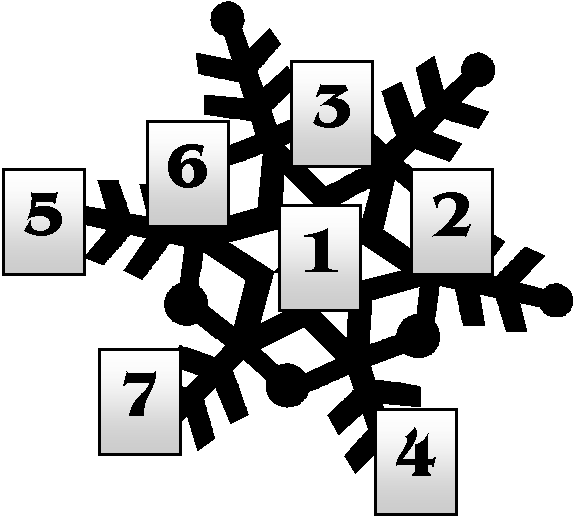
Each One Unique Spread

Use this spread to ask a question about your situation when you are confused or certain things are not as they appear.  It’s a good way to help you keep on the path to reach your goal(s).


February Tarot Spread (Full Moon)   

Card One:       What is nearest and dearest to your heart in this matter?

Card Two:      What does your intuition tell you about the situation?

Card Three:    What does your imagination tell you about the situation?

Card Four:     What is hidden beneath the surface?

Card Five:      What is out of reach at this time?

Card Six:        What does logic say about this situation?

Card Seven:    What is the possible outcome?


Finding Warmth in the Cold Times

Tiptoe through the snowflakes

We are closing in on the end of February, and we can look forward to the month that “comes in like a lion.”  It’s still cold in Central New York and there’s snow on the ground.  The forecast predicts unpleasant weather for the weekend.  That is unless you are a snow bunny, snow sports person or some similar aficionado.  Last night, a whole bunch of snowmobilers came through our area around midnight disturbing my cold-driven sleep.  It was cranky-making after a day of sneezing and muzzy headedness.

For some of us, winter makes us cranky, depressed, and out of sorts.  Normally, I ‘make do’ and find things to do–quilting with bright colors, reading lighthearted books, and watching British murder mysteries on DVD or television.  Because I’ve had the first cold in years, I’m a little more cantankerous.

I do believe there is a release in giving voice to your cranky side.  Just as I believe that in difficult times, it is important to give voice and respect your anger, grief, sorrow, and despair.  It’s also important not to dwell there.  Living in a pool of rage is exhausting and more than a little icky.  The ick clings to you and repels others who might comfort you; and will also make you dismiss the kindness of friends and strangers.  It’s difficult find gratitude in these times.  I advocate giving yourself enough mileage so you can have some hindsight.  In hindsight, you may be grateful for the losses, the setbacks, and the tribulations because it has made you stronger and better.  In the middle of it, you just need to muddle through, work it out, and find new purchase as you climb this new cliff.

It’s a balancing act between honesty and healing, I believe.  You can’t heal dishonestly.  It just doesn’t work.  Mostly dishonest healing is about stuffing the emotions down without working through them.  That stuffing compacts upon itself and somehow continues to expand and intrude in your life.  It will come out in weird ways and eventually, you will need to clean up the mess.

There’s a health issue in my family now.  I am not grateful for this situation.  I am grateful for the past, the strength, the joy and the beauty.  I am working through sorrow, regret, guilt, anxiety, and depression.  I must live through this situation and already I can see many points of beauty and gratitude.  It’s just not the time to feel it.  There’s joy and delight in other situations and that’s my comfort and I’m very grateful for that.

I didn’t intend to talk about this even if it is somewhat vague so the picture doesn’t quite fit.  Except that I think it’s funny and delightful.  What happy women, dancing and playing in the snow.

Getting to Carnegie Hall

Carnegie Hall is the pinnacle venue for a performing artists:  to play at Carnegie Hall is to know that you have “arrived.”   The first time I heard that joke was probably from my father who said it in Brooklyn accents, a man asks a taxi driver how to get to carnegie hallCarnegie Hall?  And the taxi driver said, “Practice, practice, practice.”  My father liked to exaggerate when he told a joke, he was a good storyteller and joker.

How many of us took an instrument or learned a skill and found out that to get really good at it, you had to do it over and over again.  Practice.  It could be piano, drawing, violin, or even mowing the lawn.  To get it right and to get so whatever it is expresses what you want, you have to practice the basics again and again.  To reach the pinnacle of achievement (to arrive, so to speak), you have many hours, months, and years of practice and learning.

A few years ago at work, a group of us met with some architects to discuss building design.  Each group of architects talked about their practice of architecture and what it meant for their business and their creativity.  And that is the other part of practice, it’s the underpinning of your creative expression; this expression of who you are.  I can talk to you about the practice of my profession, librarianship, in lofty terms, and how it fulfills the ideals of a democratic society and how it is about getting to the heart of a question.  It is a practice.

That practice is a myriad of skills, basic and advanced, along with knowledge that spans both breadth and depth.  How I got here was to practice those skills and apply that knowledge every minute of each day I was working.  And a lot of time outside of my job too.  I am a librarian in my heart as well as something I do to earn my paycheck.

It is also true of spiritual practices, the real point of this post.  The only difference is, I think that the pinnacle (“to arrive) is not the point.  It’s all about the practice.  It is in the practice that we find our inner wisdom and our gnosis, our knowing.   At a recent work retreat, we had a philosophy professor come and talk to us about stress and stress reduction.  He explained to us that philosophy asks the questions:  How shall we live?  Why is there something and not nothing?  Why is there beauty?  And philosophy asks ethical questions as well:  How shall we live?  How do we make meaning?  what is a good life?

He spoke of well-being not in terms of health but in the tersm so fthe Greek idea of a balanced life.  To be well in our Be-ing.  To seek the middle way.  It sounds a lot like a Pagan spirituality, doesn’t it.  I suspect that underneath the layers of misunderstanding, most religions seek that kind of balance as well.

He went on to speak of practice; that by following a daily practice every day you find that well being.  He defined the daily practice as a set of mundane habits that you follow every day.  He spoke of conscious belly breathing and Qi Gong as the way to follow a practice.  I would add mindfulness to the daily habits.  For instance, each morning as I go about my morning wake up and shower, I stand before my altar located outside the bathroom and say a short devotion.  And then I take my vitamins.  The vitamins are part of the devotion and are in a basket on my altar which is devoted to self-care and well Be-ing.  Short, simple, and incorporated, mindfully, into my routine habits.

On my needlework blog I talked today about Tom Cowan’s statement in his book, Shamanism as a Spiritual Practice for Daily Life, that a daily spiritual practice of shamanism gives rise to an art practice.  I think mindful practice births other practices, allowing us to expresss ourselves and our wisdom in myriad ways.  I have a professional practice, a spiritual practice, and a creative one (or two, or more).  What is creative to me might be drudgery to you, and the reverse will be true as well.  So together, our practices create diversity and shows us the infinite ways the Universe expresses life, beauty, and wisdom.

May you find the heart of your daily practice and the well BE-ing of your soul.

Using My Powers For Good….and not for Evil!

As I’ve mentioned before, I have some expressions that my Source of image: http://annetaintor.com/ friends have dubbed Gailisms.  For the most part, most of these expressions have a story behind it or it is really an expression used by my family.  I love stories.  I love to tell them and I love to hear them.  A good portion of my family are storyteller — telling stories about each other and on each other.  To me, geneology is boring a sort of family organizational chart.  What I love are the pictures and stories.  In my family, when we show each other a photo or a drawing made by one of us, we know a story is going to be told.  This habit and method of communication extends to my family of choice as well.  In this way, we create community or tribe.

Many years ago, my youngest brother was telling me about three incidents that involved his thinking bad thoughts and having them come true.  I don’t remember the incidents exactly anymore but it involved things like, “you’re going to get hurt doing that,” and then the other person gets hurt.  He was talking to me on the phone about these situations and I quipped, “You should use your powers for good and not for evil.”  From that point on, if he was nervous about something, he’d email me or say, “Use your powers,” or “I’m using my powers.”  Then my sister picked it up and it became a family expression.

The use of this expression has extended to my work.  We are holding a raffle fundraiser for our social committee in celebration of Valentine’s day.  The prize is a basket of wine and chocoloate.  When a young coworker came in to buy his tickets, he said he’d better win.

I said, “Too late, I’m using my powers.”

And he said, “Are you using your powers against me?”

“No I’m using my powers for MY good.”

Obviously the application of this statement has infinite variety and opportunity for cleverness (at least in my mind).

This was around the time I went from a solitary to a Pagan active in a community and this quip took on new power.  As Wiccans and Pagans, we believe we do have the ability to create change by bending our thoughts and will to the change we want or need.  We also try to use our abilities (powers) in harmony with the Universe.  When our actions follow the trail of our mind and the Universe, we create magical change.  Then, for me, the quip, “using my powers for good and not for evil,” took on a more textured meaning.  It acknowledges that we, as humans, do have the power to effect our lives and the world around us, and that we need to act responsibly and  with gratitude and compassion.

I’ve also quipped that you can tell when it’s going to be a bad movie if the characters over-pronounce certain words:  Goddess becomes gawDESS and evil becomes eeeeeeevvvvvvilllllllllle (long, very long e).

So when using your powers, know that it is prounounced EEEEEEVILLLLLLLLE.

Post Navigation

Follow

Get every new post delivered to your Inbox.

Join 1,058 other followers